Node
Nodes are the fundamental execution units. Each node performs a single, well-defined responsibility, such as rendering UI, evaluating conditions, computing values, or triggering side effects.
- Node graphs define navigation, logic, and side effects triggered by events. Node graphs represent executable logic rather than static diagrams. The graph is evaluated at runtime based on current state, inputs, and events.
- Execution is deterministic and event-driven; each node runs in response to explicit triggers and state.
- Nodes mutate state only through declared actions to keep flows auditable.
This example shows five nodes executing one after another:
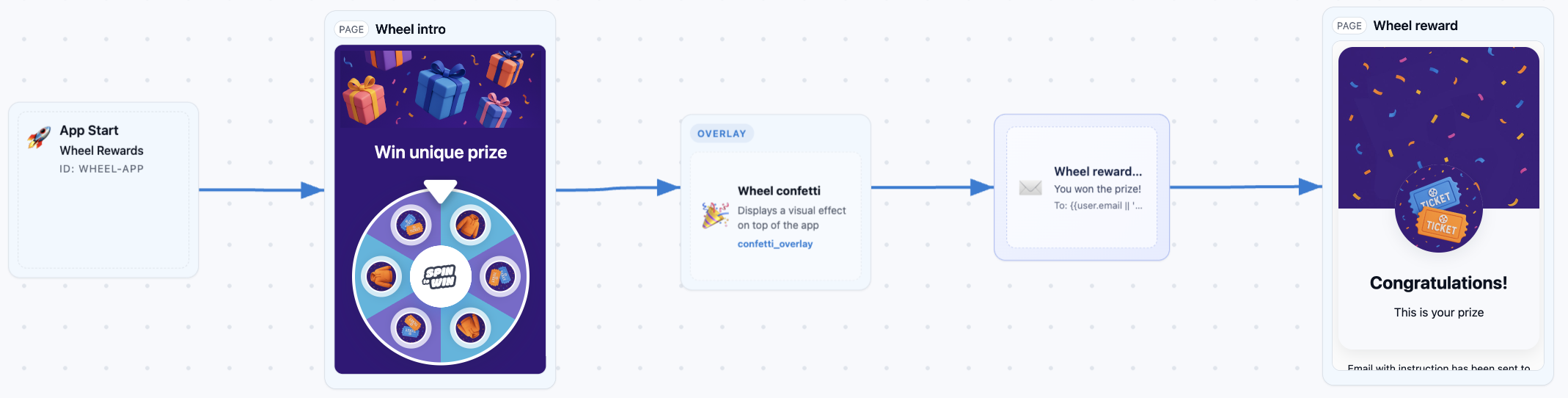
When this marketing mini-app loads, the user sees several UI components with a fortune wheel as the primary focus. The flow waits for the user to spin the wheel before advancing. After the spin completes, the experience displays a confetti layer, triggers an automated email, and then shows a final congratulations screen before ending.
The page node powers the visible UI, while an email node handles outbound communication in the background. Explore each node type in detail in the Nodes reference.